If your family's summer is built around time behind the boat, the ski/wakeboat is the lease to look at first. It carries up to eight people, comes with the tow gear already aboard, and is set up for wakeboarding, water-skiing and tubing rather than dockside entertaining. The question is not whether it can pull a rider. It is whether your household will use it that way often enough to make it the right choice.
What the ski/wakeboat is for
The ski/wakeboat is the active boat in our fleet. Where the pontoon is built around a wide deck, this one is built around the stern: the place where the rope goes, the rider waits, and the driver and spotter watch. Seating is rated for up to eight, which is enough for a family plus a couple of guests, but not so many that the boat turns into a ferry service.
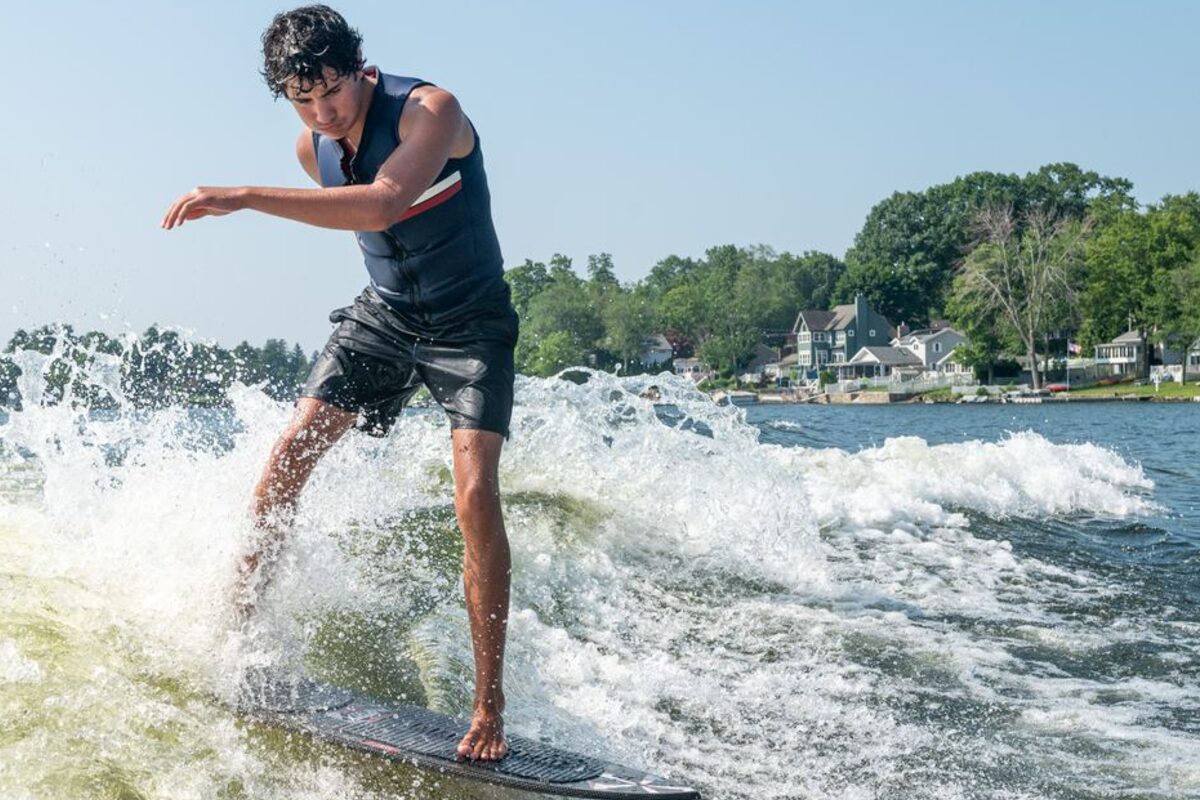
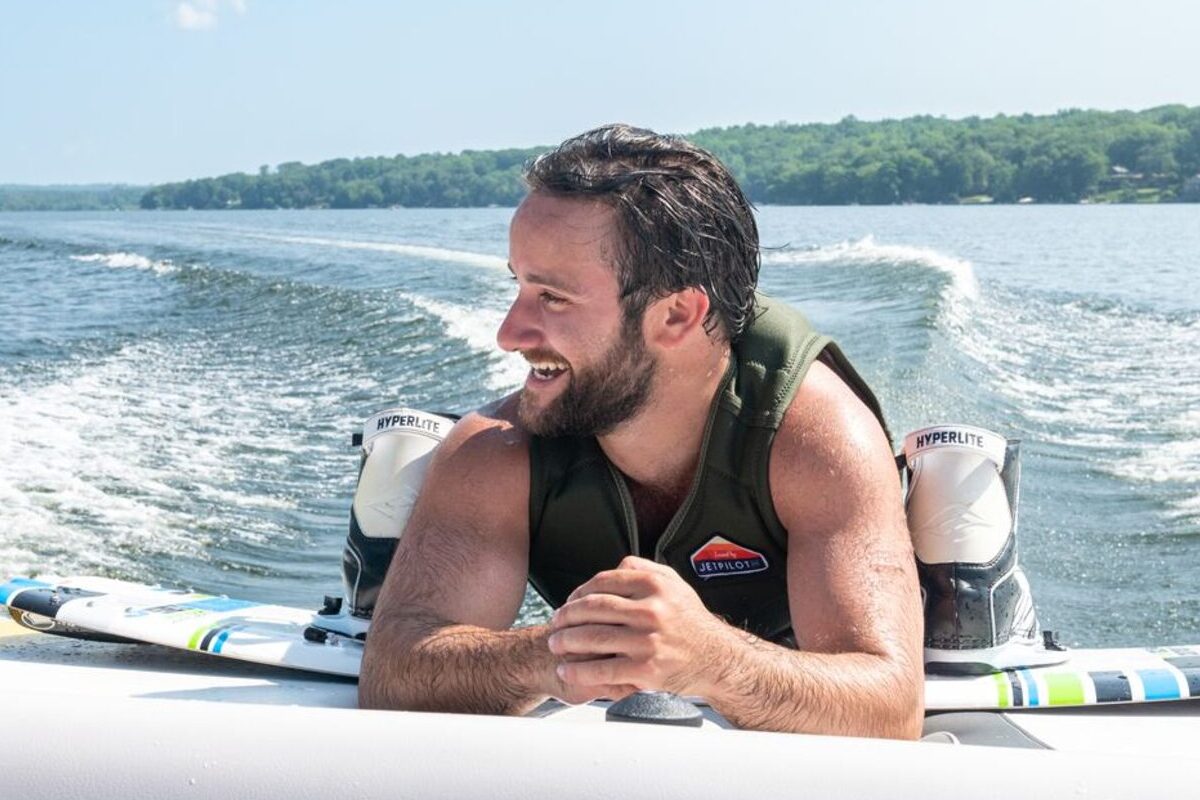
It covers the three things most families mean when they say watersports. Wakeboarding is the board-and-rope end of the range, water-skiing is the two-ski or slalom end, and tubing is the version that asks the least of the rider and produces the most noise. A good morning often includes all three, in roughly that order of ambition.
Nothing about the boat requires you to be good at any of it. The lease is not a lesson package, but the boat is manageable for a first-timer and capable enough for someone who has been skiing since childhood.
A morning behind the boat
The best water is early. On most Connecticut lakes the wind comes up by late morning, and a rider who starts at eight gets a flat run that a rider who starts at noon does not. The tow boats tend to be out before breakfast, and the swimming crowd arrives after lunch. If you have a season ahead of you, that rhythm is worth learning in the first week.
A tow session has a shape. One rider goes, one person spots, one person drives, and everyone else waits with a towel and an opinion. The waits are shorter than people expect, because a run is usually five or ten minutes rather than an hour. Decide the order before the boat leaves the dock and the whole morning moves faster.
Every tow needs a driver and a spotter, and the spotter's job is to watch the rider rather than the water ahead. That division of labour is worth explaining to children before the first run. It also gives someone who does not want to ski a useful seat in the boat.
Tubing tends to come later, when the water is choppy and nobody is chasing a clean wake. It is also the easiest thing to do with a mixed group, since a tube does not care whether you have ever been on the water. Put the youngest or most nervous rider on first, when the driver is still being gentle.
The gear is already aboard
The lease includes the equipment that usually fills a garage: tubing, ropes, a wakeboard, a kneeboard and life jackets for the crew. That list matters more than it sounds. A family that buys a boat often spends the first season buying gear piece by piece, guessing at sizes and discovering that the rope they bought does not suit the way they tow.
On a lease, the gear arrives with the boat and goes back with it at the end of the season. You are not storing a wet tube in the basement, replacing a life jacket that no longer fits, or wondering where the second rope went. The boat and its kit are one package.
Bring towels, sunscreen, water and something to eat. The boat has what you need to get into the water; the rest is a picnic. A dry bag for phones and a warm layer for the ride home are the two things guests most often forget.
Ski/wakeboat or pontoon
This is the comparison most families actually face. The pontoon carries up to twelve, has room to walk around, and is the easier boat for grandparents, coolers, and a day that moves between swimming and sitting. The ski/wakeboat carries up to eight and gives up some of that space in exchange for a stern that is set up for towing.
If your children are teenagers who want to wakeboard, or if you have adults who still ski, the ski/wakeboat is the one that will get used. If the boat is mostly a platform for a large family to swim from, the pontoon will be the better choice. We wrote a separate guide to leasing a pontoon for the lake house because the two decisions pull in different directions.
Plenty of households are a mix. In that case, the honest question is which use happens more often: the tow rope or the swim stop. Count the weekends, not the wish list. A boat that suits eight weekends out of ten will feel like better value than one that suits the other two.
Coaching through a captain
Not every family wants to spend the first weekend learning. Our captain for a day service puts a licensed captain on the boat with the fuel and gear included, and the captain can coach first-timers through tubing, wakeboarding and water-skiing. That is useful in two situations: a family that has never towed anyone, and a group of adults who want a day on the water without appointing a driver.
The captain knows the lake and handles the driving, which means the person who usually ends up behind the wheel gets a turn to ride. It also means the first lesson happens with someone who has taught it before, rather than with a parent reading instructions from a phone at the helm.
You can book a captain for a day before committing to a season, or use one early in the season to learn the routine and then run the boat yourself. A single coached day often does more for a family's confidence than a whole summer of guessing.
Who the ski/wakeboat fits
The ski/wakeboat fits a household that will tow most weekends and has at least a few people who want to be in the water rather than on it. It suits families with teenagers, adults who ski or wakeboard, and children who are ready to learn. It is less suited to a household that mostly wants to host, or one that regularly brings more than eight people.
If that sounds like your summer, the next step is a seasonal lease, which puts the boat at your dock for the whole season with insurance, registration, maintenance and winter storage handled. Fuel is the only ongoing cost you keep. If you are still weighing the math against ownership, our comparison of owning and leasing lays out the five-year example.
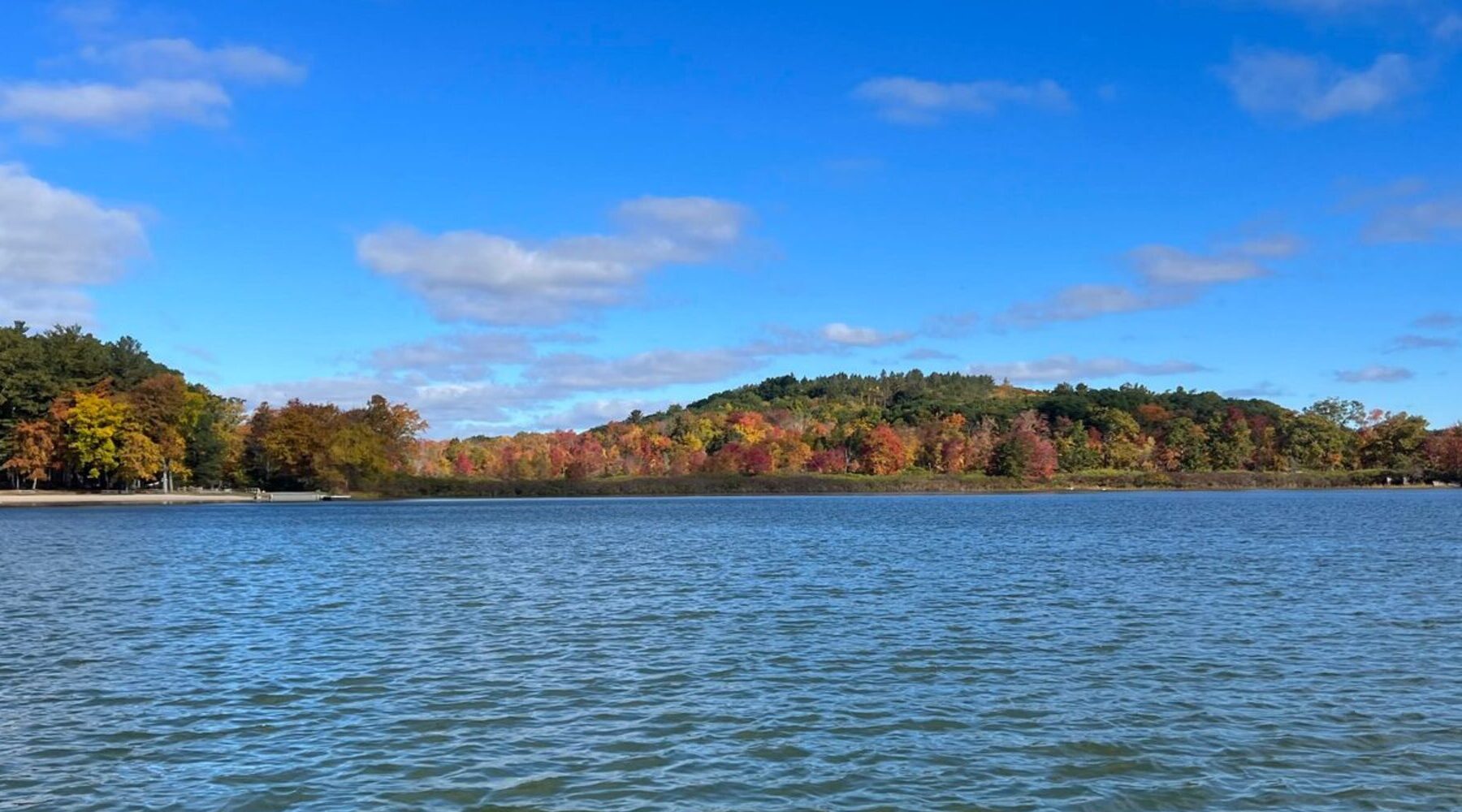
We deliver to docks on Lake Waramaug, Candlewood Lake, Highland Lake and Woodridge Lake. Tell us your dock, your crew and the weeks you have in mind, and we will confirm what is available. The boat should match the way your family actually spends a Saturday, not the way you imagine you might.